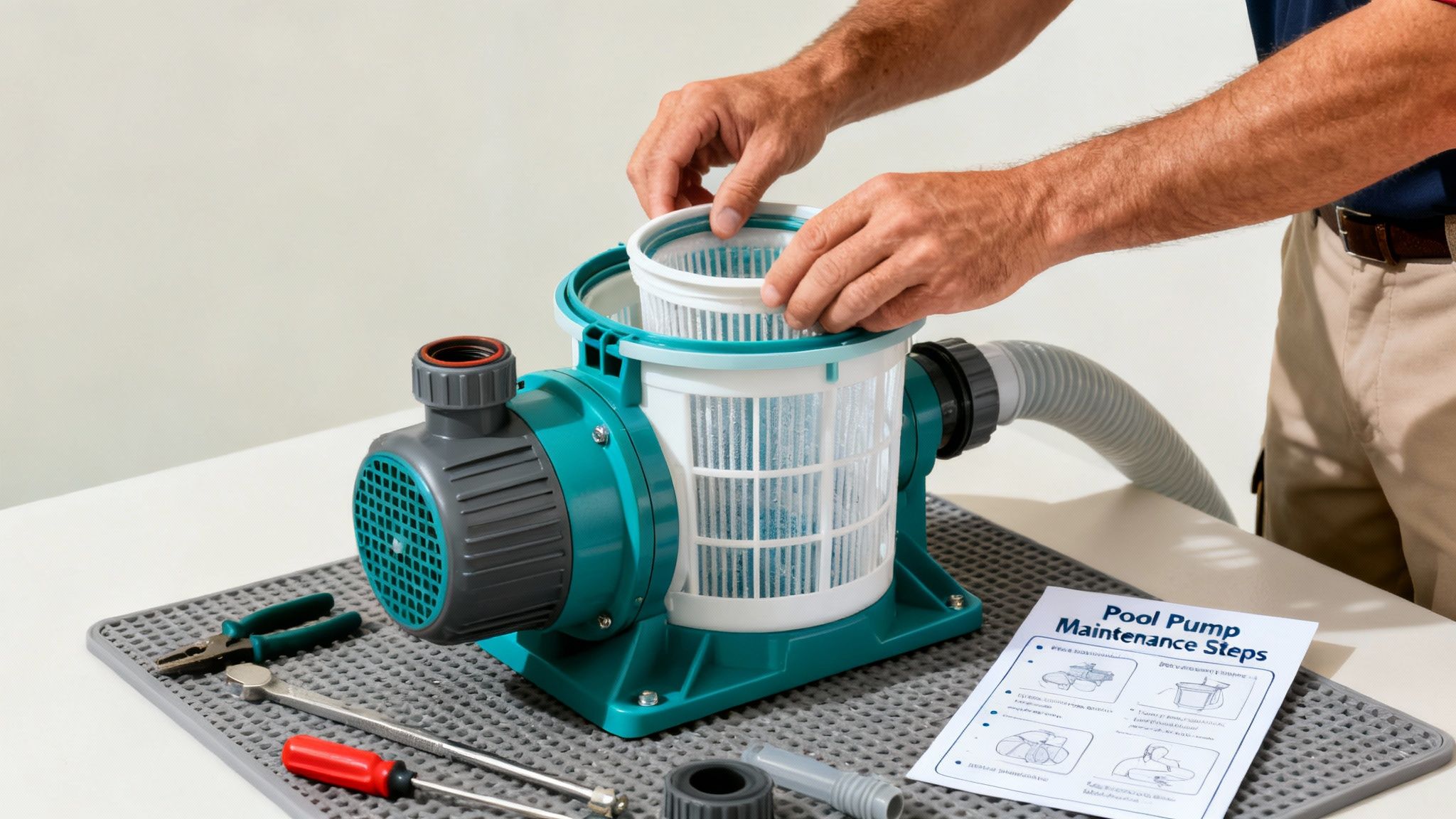
Pool equipment runs for hours every single day, and in DFW's climate, where pumps and filtration often need to operate longer during peak summer heat, the energy cost of running that equipment adds up significantly over a full season. Understanding how energy-efficient equipment options actually perform can help homeowners decide whether an upgrade makes financial sense.
Why Traditional Single-Speed Pumps Cost More to Run
Older, single-speed pool pumps operate at one fixed speed regardless of what the pool actually needs at any given moment. This means the pump runs at full power continuously, whether it's simply maintaining basic circulation overnight or handling heavier filtration demand during peak afternoon heat, using significantly more electricity than the situation often requires.
How Variable-Speed Pumps Work Differently
Variable-speed pumps allow the pump to run at different speeds depending on the actual task, running slower for basic circulation and ramping up only when higher flow is genuinely needed, such as during vacuuming or heavy filtration periods. This targeted approach to power usage can reduce energy consumption substantially compared to a single-speed pump running at full power around the clock.
Real Energy Savings in a DFW Climate
Because DFW pools often need extended pump run times during long, hot summers to keep up with sanitizer demand and heat-related evaporation, the energy savings from a variable-speed pump tend to be more significant here than in climates with shorter, milder swim seasons. Over a full year of DFW pool operation, the difference in electricity costs between single-speed and variable-speed equipment can be substantial.
Other Energy-Efficient Equipment Options
Beyond pumps, energy-efficient options exist across other pool equipment as well. LED pool lighting uses significantly less energy than traditional incandescent pool lights while lasting considerably longer before replacement is needed. Energy-efficient pool heaters and heat pumps can reduce the cost of extending your swim season into cooler months compared to older, less efficient heating equipment.
Weighing Upfront Cost Against Long-Term Savings
Energy-efficient equipment typically costs more upfront than standard alternatives, which leads some homeowners to stick with older, less efficient equipment simply because of the initial price difference. However, when factoring in the extended run times common in DFW's climate and the accumulated energy savings over multiple years of operation, energy-efficient equipment often pays for itself well within its expected lifespan.
Compatibility With Existing Pool Systems
Not every energy-efficient upgrade is a simple drop-in replacement. Variable-speed pumps, for example, need proper programming to actually deliver their energy-saving potential, and improperly configured equipment won't perform as efficiently as it's capable of. Understanding your pool's specific plumbing and equipment setup helps determine which upgrades will integrate smoothly and which might require additional adjustments.
Why This Decision Benefits From Professional Guidance
Determining which energy-efficient upgrades actually make sense for your specific pool, usage patterns, and budget requires understanding both your current equipment and how new options would perform in your particular setup, rather than assuming every efficient option delivers the same value for every pool.
The team at Bluewater Pool Care can help DFW homeowners evaluate whether energy-efficient equipment upgrades make sense for their specific pool and long-term budget.

Curious whether an equipment upgrade could lower your pool costs? Reach out to Bluewater Pool Care today.