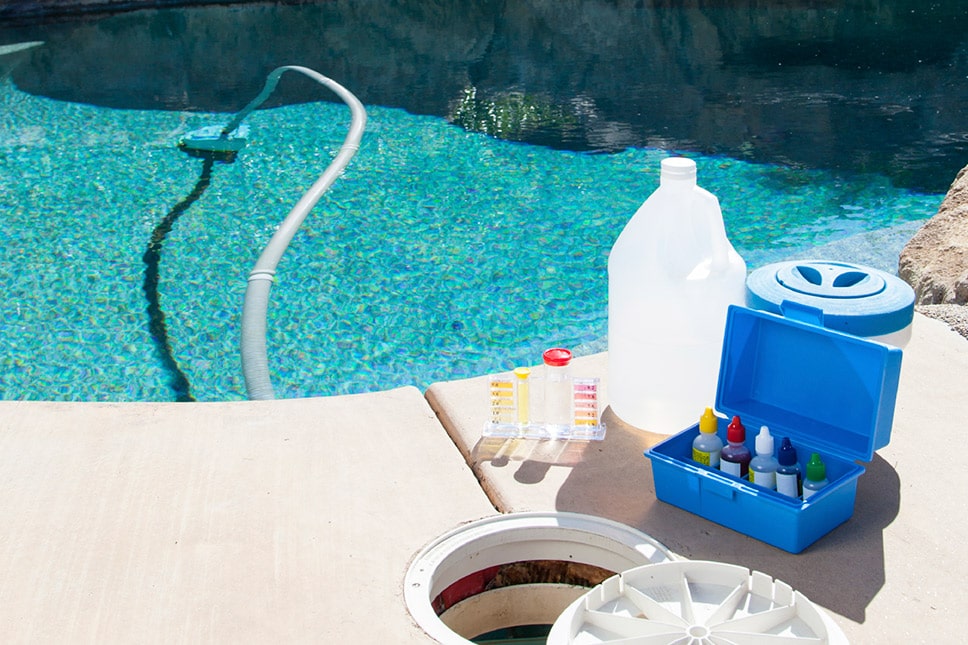
Keeping your pool water clean isn’t just about adding chlorine—it’s about maintaining the right balance of chemicals. Many homeowners search how to balance pool chemicals when their water becomes cloudy, irritating, or difficult to manage.
The good news is that once you understand the basics, balancing your pool becomes much easier.
Balanced water is essential for both safety and performance.
When your pool chemicals are balanced:
If your chemicals are off, even slightly, it can lead to bigger issues.
When learning how to balance pool chemicals, there are a few main levels to focus on:
Kills bacteria and keeps your pool sanitized.
Controls how acidic or basic your water is.
Helps stabilize pH levels and prevent fluctuations.
Protects pool surfaces and equipment.
Each of these works together to maintain proper water balance.
If you’re wondering how to balance pool chemicals, follow these steps:
Start by using a test kit or strips to check:
Testing gives you a clear starting point.
Alkalinity acts as a buffer for your pH.
Adjusting it first helps:
Once alkalinity is correct, adjust your pH.
Proper pH:
After pH is balanced, adjust your chlorine.
This ensures:
Make sure calcium levels are within the proper range to avoid scaling or damage.
Your pool will usually show signs when something is off.
Look for:
If you notice these, it’s time to rebalance your chemicals.
When learning how to balance pool chemicals, avoid these mistakes:
Small, gradual adjustments work best.
Chemicals alone aren’t enough—your system plays a big role too.
Regular pool filter cleaning helps:
Proper circulation ensures chemicals are evenly distributed.
Most pools should be tested and adjusted:
Staying consistent prevents major imbalances.
Balancing pool chemicals can be time-consuming and tricky.
With weekly pool service, your pool is:
This helps prevent problems before they start.

Balancing your pool chemicals is the key to clean, clear, and comfortable water. With the right approach, consistent care, and reliable service, your pool can stay in top condition. Bluewater Pool Care helps take the guesswork out of pool maintenance so you can enjoy your pool without the hassle.