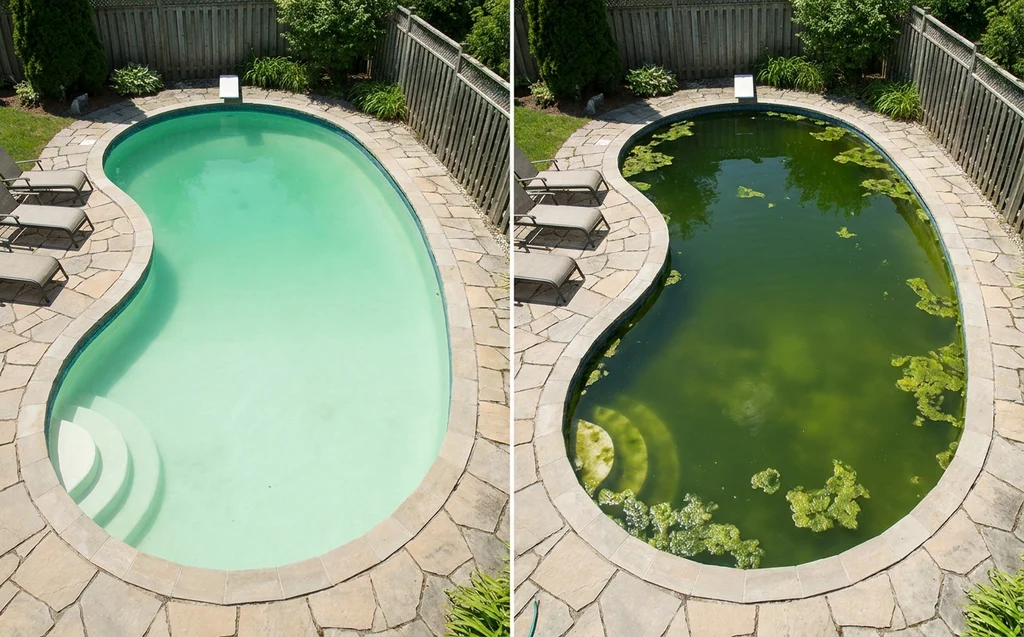
A pool that's turned fully green, whether from a vacation, a broken pump, or simply falling behind on maintenance, can feel overwhelming to deal with. Homeowners often assume the fix is as simple as dumping in extra chlorine, but a genuinely green pool requires a more structured recovery process to restore clear, safe, swimmable water without causing new problems along the way.
Why a Green Pool Isn't a Quick Fix
Once a pool has gone fully green, it typically means algae has multiplied extensively throughout the water and often onto surfaces as well. Simply adding chlorine to green water without addressing the underlying imbalance, filtration capacity, and physical algae presence usually results in a frustrating cycle of temporary improvement followed by the green tint returning within days.
Step One: Assessing Water Chemistry
Before any treatment begins, proper recovery starts with testing the water's actual chemistry, since a green pool often has significantly imbalanced pH, alkalinity, and sanitizer levels that need to be addressed as part of the overall recovery process rather than ignored in favor of just adding more chlorine.
Step Two: Shocking to Break the Algae Bloom
A proper shock treatment, calculated based on the pool's actual volume and the severity of the algae bloom, is necessary to overwhelm the existing algae growth. This typically requires a much higher dose than routine maintenance shock treatments, since a fully green pool has algae counts far beyond what a standard weekly treatment addresses.
Step Three: Filtration Has to Keep Up
Killing algae is only part of the process — the dead algae then needs to be filtered out of the water. This often means running filtration continuously for an extended period, sometimes 24 hours a day for several days, and frequently backwashing or cleaning the filter as it becomes clogged with the volume of dead algae being removed from the water.
Step Four: Brushing to Remove Algae From Surfaces
Algae doesn't just live in the water — it often attaches to pool walls, steps, and other surfaces. Thorough brushing throughout the recovery process helps dislodge algae from these surfaces so it can be filtered out, rather than remaining attached and potentially reintroducing algae back into the water even after the visible green color clears.
Step Five: Rebalancing Once Clarity Returns
As the pool clears, chemistry needs to be reassessed and rebalanced, since the shock treatment and extended filtration process affect pH, alkalinity, and other water parameters that need adjustment before the pool returns to a stable, properly maintained state.
Why DIY Green Pool Recovery Often Fails
Without professional-grade testing, accurate shock calculations based on actual pool volume and algae severity, and consistent monitoring throughout the multi-day process, DIY attempts at green pool recovery frequently stall partway through, leaving homeowners with a pool that's improved but still not fully clear or properly balanced.
Preventing a Repeat Occurrence
Once a pool has been successfully recovered, ongoing consistent maintenance is what prevents the same situation from happening again. A green pool is rarely a one-time random event — it's usually the result of a maintenance gap, whether from a vacation, equipment failure, or simply falling behind, and addressing that underlying cause matters just as much as the recovery itself.
The team at Bluewater Pool Care has restored plenty of fully green DFW pools back to clear, swim-ready condition, and can help set up ongoing service that prevents it from happening again.

Dealing with a green pool right now? Reach out to Bluewater Pool Care for professional recovery service.